
How Much Does Radiology Software Cost for a Radiology Clinic?

Summarize this article with:



Thinking about purchasing radiology software? But stepping back because not having reliable information about its pricing. And the worst scenario is paying a sufficient amount but not getting the expected ROI, which leaves you back at zero.
Also, most radiology software vendors don't provide exact rates. They estimate based on many factors.
Another thing is that assuming medical imaging software pricing is limited to purchasing, setup, subscription, and maintenance costs is a myth.
This can make you confused about which factors to consider while calculating the cost of imaging software.
Addressing the above problem, this guide has mentioned all the factors that can affect the cost of radiology software, helping you to plan your budget accordingly.
Key Factors That Influence Radiology Software Cost
The cost of radiology software does not depend on the initial purchase only. There are other drivers that help you evaluate the Total Cost of Ownership (TCO). Let's face these drivers individually.
Software Modules
Core Modules
-
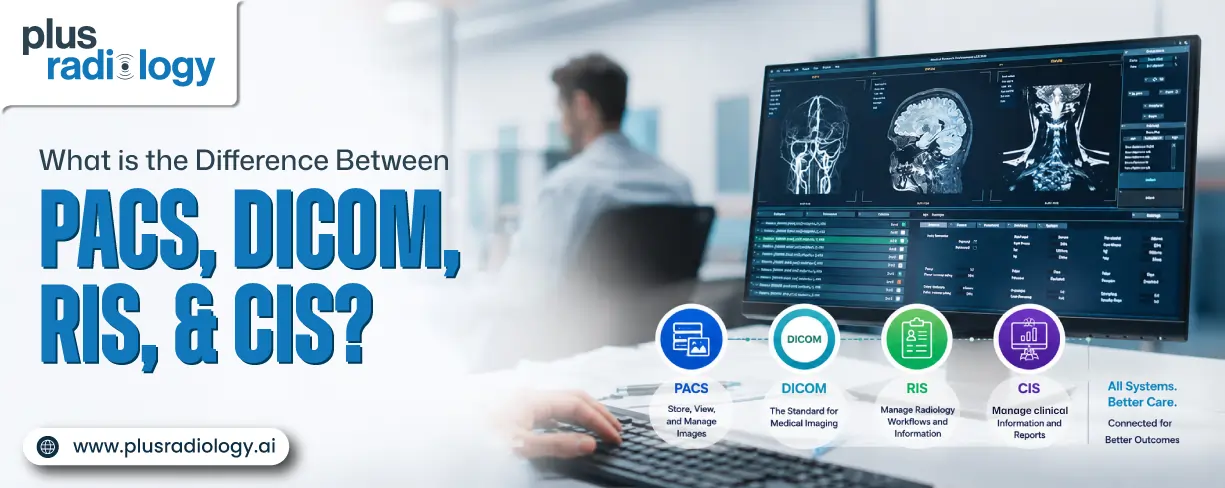
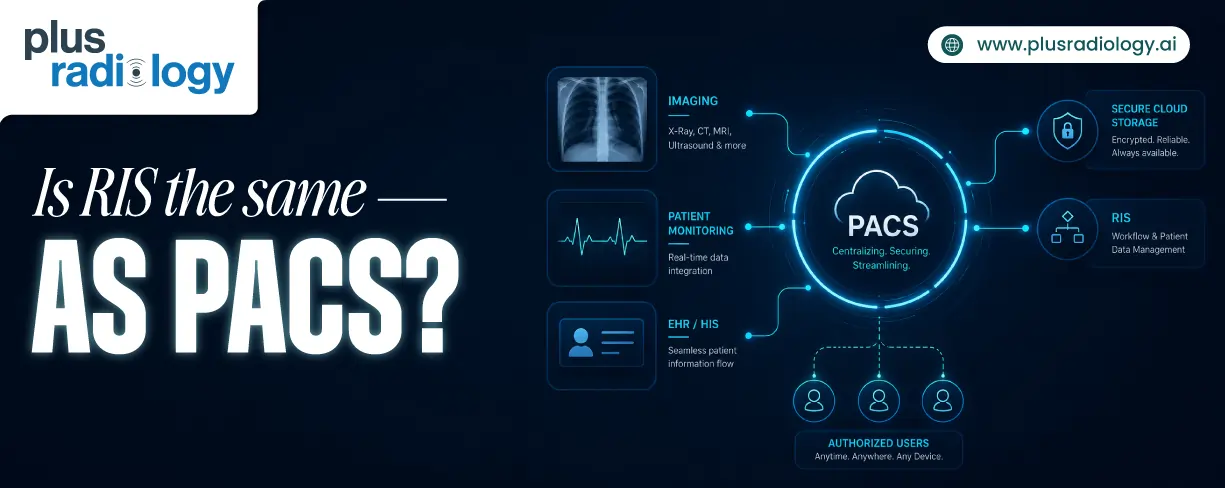
RIS: Radiology Information System manages patient appointments, scan registration, and workflow tracking. RIS software costs you a lot, as it is one of the fundamental modules for imaging workflow.
-
PACS: Picture Archiving and Communication System allows to store, view, access, and share images digitally. It comes with DICOM imaging software to transform each image into DICOM format. This is also one of the costliest modules.
Monitor performance and improve outcomes with data-driven reporting tools
Optional Modules
-
Patient & Referrer Portals: Patients can carry out his/her radiology related task directly through the patient portal, whereas physicians can access all the patients' records from the referrer portal. Compared to the RIS and PACS software costs, this module is less expensive.
-
Billing management: This module contributes to invoice generation, payment tracking, and insurance processing. Billing system cost will depend on the functionalities it provides.
-
AI-powered capabilities: AI algorithms can help in report creation, accurate diagnosis, image analysis, error detection, and performance monitoring. It is optional and generally comes with a premium subscription.
-
Teleradiology hub: Teleradiology allows remote reporting facilities. Basic teleradiology software service will not cost you any extra money, but the advanced one will.
-
Analytics & Business Intelligence: This module helps to gain insights related to performance, patient satisfaction, diagnostic accuracy, and revenue cycle. Only highly complex analytics will increase the cost.
Deployment Type
-
Cloud-based solutions: In this, the software is treated as SaaS. You can directly access the software through the internet. This mode will have a low initial cost. Here you will have to spend monthly or annually for subscriptions.
-
On-premise installations: This includes hosting software on the clinic's own server. Here, you have to manage every single infrastructure, including hardware, software, and their maintenance. It requires more initial cost and less operational cost.
-
Hybrid models: Hybrid models combine the functionality of cloud and on-premise modes. Confidential data is stored locally, while cloud storage is used for recovery & backup purposes. You have to spend moderate amounts initially for local setup and monthly or annually for cloud setup.
Number of Users and Locations
-
User licenses costs: The vendor can take charge based on the number of users. There might be per-user charges, concurrent (number of users operating simultaneously) user charges, role-based charges, or fixed tier-based charges.
-
Multi-location clinic requirements: To operate multi-site clinics, additional functionalities like centralized storage, unified scheduling, and real-time visibility of workflow are required. Due to this, expenses will surely increase.
Storage Requirements
Storage capacity is another significant cost factor of radiology software. Storage requirements depend on the imaging data, modality types, data archiving, and data backup. And pricing will depend on the amount of storage required.
Integration Needs
To experience smooth data flow between multiple platforms in radiology software, perfect integration is needed. Platforms such as EHRs, HIS, and imaging modalities need to be integrated with radiology software mandatorily. The expense of integration depends on the number of entities being integrated.
Manage patient information seamlessly from registration to report delivery
Customizing the Workflow
Customization involves developing the software based on your specific requirements. This involves additional development, configuration, and testing work. This will surely increase the expense depending on the complexity of customization.
Implementation of Software
To operate software, it first needs to be deployed in the real environment. This includes software installation, workflow configuration, security setup, and system testing. Now the software implementation fees depend on the deployment mode, number of locations, workflow complexity, etc.
Training and Technical Support
Training helps users learn how to operate software. Training cost depends on the number of users, locations, and the complexity of the software. Technical support helps to solve technical issues related to software. And the cost related to it depends on the complexity of the issue that occurred.
Hidden Costs to Consider
To arrive at exact figures, you don't need to just consider the initial purchase and installation factors only. Some of the additional drivers that impact radiology software pricing are:
-
Hardware upgrades: Medical imaging clinics require hardware upgrades frequently to maintain performance and to prevent security threats. So avoiding upgrades is not a choice.
-
Data Migration: The data from existing systems needs to be transferred into healthcare imaging software if you are switching from completely offline to web-based systems. The expense will depend on volume, size, quality, and compatibility of data with the system.
-
Additional Storage Needs: When clinics run out of storage capacity, they are likely to invest in additional storage services. This will again increase your expenses.
Reduce documentation time with smart SOAP notes and progress tracking tools
-
Compliance and Security Enhancements: To ensure proper security, imaging centers might need to extend their security services. The cost will depend on the type of security mechanism to introduce and the regulatory standards to comply with.
How to Calculate ROI on Radiology Software
Only learning about the cost factors of radiology software is not enough. You must estimate the ROI to ensure that your choice is correct or not.
Let's go through the factors that help to calculate ROI:
- Increased operational efficiency: The entire patient lifecycle, from registration and scheduling to scanning and report delivery, must be optimized.
- Reduced administrative workload: Tasks such as patient registration, appointment scheduling, follow-ups for upcoming appointments, logging patient scans, billing & insurance process must be carried out with less manual support.
- Faster report turnaround : Reports must be submitted on time without compromising on quality and consistency.
- Improved patient satisfaction: The patient must get on time and accurate results, along with proper care and support.
- Revenue growth opportunities: Accelerated billing process, reduced claim rejection, optimized utilization of modality, and improvement in no-show rates can increase revenue.
Final Thoughts on Radiology Software Cost
The cost of radiology software varies depending on factors such as deployment mode, number of users, number of locations, integration requirements, customization needs, and much more.
Blindly selecting any software that matches your budget requirement initially can make you run out of finances later on. You must estimate the total cost of ownership over a minimum 5 - 6 year timespan.
Also, it is not easy to decide the budget as vendors generally don't mention the exact rates. They provide a quotation after considering development, implementation, and maintenance charges based on the functionalities you want.
By carefully assessing your requirements and available options in the market, you can invest in radiology software that not only fits your budget but also gives you a good ROI.
FAQs
Cloud-based radiology software is generally more affordable for most small to medium-sized clinics. On-premise solutions require a larger initial investment but can become cost-effective for large clinics over the long term.
It depends on the vendor. Many modern radiology software solutions offer RIS and PACS as an integrated package, while others provide them as separate modules that can be purchased individually.
Radiology clinics can reduce software costs by purchasing only the necessary modules, minimizing unnecessary customizations, planning data migration efficiently, and comparing vendors.
Not usually. In most cases, AI functionality is not included in the standard pricing of radiology software. It is typically offered as an optional add-on module or as part of a premium subscription plan.

Recent Posts

Is RIS the same as PACS?
June 29, 2026
HIPAA Compliance Checklist for Imaging Centers
June 23, 2026