
AI for Imaging Centres: Faster Turnaround Time Explained
Summarize this article with:


Delays in imaging centres are a thing of the past. Artificial Intelligence is rewriting the entire workflow - what used to take hours for Radiology now happens in minutes. The impact on patient care and operational efficiency is huge.
One of the best examples is the AI report generation module. It creates quick report templates and automatically puts the right health information in the right place - just with one click. And the best part? You can even speak to it and send the report by email.
Quicker processing to faster reporting - all with fewer bottlenecks. That's how AI is leading the change.
In this guide, we will discuss:
- How does AI reduce radiology turnaround time (TAT)?
- What tools are used?
- What measurable improvements can imaging centers expect?
- How can centers implement AI safely and effectively?
This helps operational managers, radiologists, and healthcare administrators optimize workflows, improve patient experience, and scale imaging operations.
Why Turnaround Time Matters in Radiology?
Understanding the core problem of Radiologists is essential, and one of them is Turnaround Time (TAT). It actually refers to the time between image acquisition (CT, MRI, X-ray, Ultrasound) and final report delivery to the referring physician.
Delays in TAT impact:
- Patient outcomes (especially stroke, trauma, oncology cases)
- Emergency department throughput
- Physician satisfaction
- Revenue cycles
- Compliance standards
Experience the ease of seamless teleradiology services with AI-powered PlusRadiology
In high-volume imaging centers, bottlenecks typically occur in:
- Report generation
- Study prioritization
- Image interpretation
- Peer review & quality checks
- Communication of critical findings
This is where Artificial Intelligence (AI) transforms the workflow.
How AI Reduces Turnaround Time in Imaging Centers
AI is simplifying Radiology in various ways - whether it is PACs, RIS, MRI scanning or report generation. It is helping Radiologists cut down wait times, speed up workflows, and skip a lot of the manual effort.
This “quite superpower” is making turnaround time quicker than ever for Imaging centres.
1. AI-Based Smart Triage and Case Prioritization
Radiologists often read studies in order of arrival. Critical findings may sit in the queue unnoticed. That's where AI-based triage software helps you.
AI-powered triage tools when integrated into PACS systems, automatically:
- Detect acute intracranial haemorrhage
- Identify pulmonary embolism
- Flag pneumothorax
- Highlight large vessel occlusions
These studies are pushed to the top of the worklist.
Impact on TAT
- Critical cases read within minutes
- Reduced delay in emergency diagnosis
- Improved clinical outcomes
In stroke centers, AI triage has reduced time-to-report significantly in acute cases.
Read More : Top Medical Practice Management Software of 2025
2. Automated Pre-Analysis & Annotation
Healthcare-based AI models pre-process imaging studies before the radiologist opens them. They automatically:
- Segment organs
- Measure tumor volumes
- Detect nodules or lesions
- Highlight suspicious regions
Why This Reduces TAT
Instead of manually measuring structures or scrolling through hundreds of slices:
- Radiologists review AI suggestions
- Validate or adjust findings
- Finalize reports faster
This reduces interpretation time without compromising accuracy.
3. AI-Assisted Reporting & Structured Templates
Report creation can consume 30-40% of total case time. AI-driven Natural Language Processing (NLP):
- Converts speech to structured reports
- Auto-fills normal findings
- Flags inconsistencies
- Suggests impression statements
Manage your Radiology team better with PlusRadiology's multi-user access
Operational Advantage
- Faster report finalization
- Fewer documentation errors
- Standardized reporting
- Improved compliance
Structured reporting also improves interoperability with EMR systems.
4. Workload Balancing Across Radiologists
AI workflow orchestration tools:
- Monitor radiologist workloads
- Redistribute cases dynamically
- Match subspecialty expertise to study type
For example:
- Neuro cases routed to neuroradiologists
- MSK cases to musculoskeletal specialists
Result
- Reduced backlog
- Optimized productivity
- Lower burnout
Balanced distribution directly improves average TAT across the organization.
5. Quality Control Automation
Before final sign-off, AI systems:
- Detect report-image mismatches
- Identify missing impressions
- Flag contradictory statements
Instead of post-report corrections, errors are caught instantly.
Impact
- Fewer revisions
- Faster approval cycles
- Reduced medico-legal risk
Measurable Outcomes Imaging Centers Experience
Imaging centers implementing AI typically report:
- 20-40% reduction in average TAT
- Faster emergency case reporting
- Higher radiologist productivity
- Reduced overtime costs
- Improved referring physician satisfaction
In high-volume centers, even a 10-minute reduction per case scales into hours saved daily.
Never miss updates with PlusRadiology's automated alerts & notifications
How Imaging Centers Can Adopt AI Successfully
Reducing turnaround time requires more than purchasing AI software. Here are the key steps that help you in AI Adoption.
Step 1: Workflow Assessment
Try to map:
- What's the current average TAT
- Bottleneck stages
- Emergency vs routine case load
Step 2: PACS & RIS Integration
AI must integrate seamlessly into:
- PACS systems
- Radiology Information Systems (RIS)
- Electronic Medical Records (EMR)
Without integration, AI adds friction instead of reducing TAT.
Step 3: Pilot Deployment
Start with high-impact areas:
- Stroke detection
- Chest CT triage
- Mammography AI
Measure performance improvements before scaling.
Step 4: Radiologist Training & Governance
AI should assist, not replace.
Establish:
- Review protocols
- Validation guidelines
- Performance audits
This ensures trust and compliance.
Addressing Common Concerns
Does AI Replace Radiologists?
No. AI enhances productivity and reduces repetitive workload. Final diagnosis remains with the radiologist.
Is AI Reliable Enough?
FDA-cleared AI tools undergo clinical validation. However, governance and human oversight remain critical.
What About Data Privacy?
Enterprise-grade AI solutions comply with HIPAA and regional data protection regulations.
What Do You Gain by Using AI for Fast TAT?
Reducing turnaround time using AI creates compounding benefits:
- Faster treatment decisions
- Improved patient experience
- Increased imaging capacity
- Better SLA adherence
- Competitive differentiation
Imaging centers that adopt AI early position themselves as technology-forward, efficient, and clinically responsive organizations.
Manage your multiple clinics effortlessly with AI-powered PlusDoctor Software
Final Takeaway
This blog has gone through the top ways AI helps imaging centres reduce Turnaround Time.
It helps them with:
- Prioritizing urgent cases
- Automating detection and measurements
- Accelerating reporting
- Optimizing workload distribution
- Enhancing quality control
The result is not just speed, but safer, scalable, and smarter radiology operations.
For imaging centres aiming to improve operational efficiency while maintaining diagnostic excellence, AI is no longer optional - it is a strategic imperative.

Recent Posts
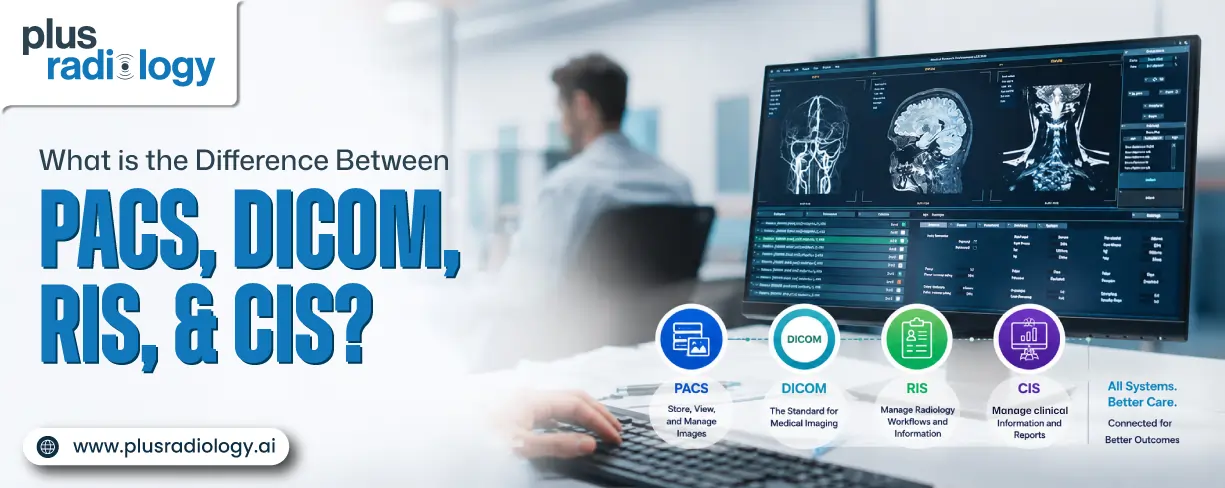

Is RIS the same as PACS?
June 29, 2026
HIPAA Compliance Checklist for Imaging Centers
June 23, 2026
AI for Radiology Reporting: How NLP Transforms Reports
April 29, 2026