
Top 18 Misconceptions About AI in Healthcare
Summarize this article with:

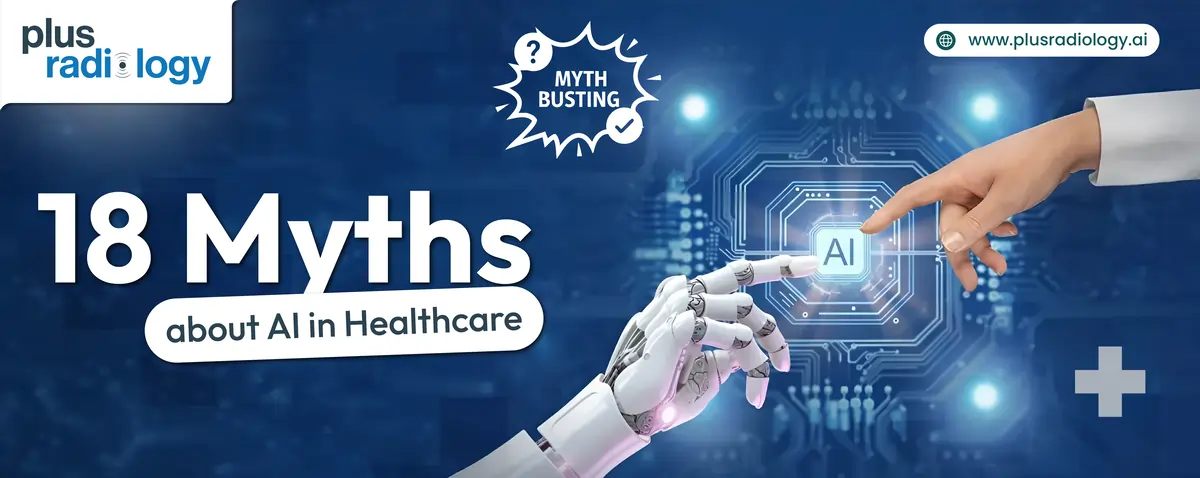
The potential of Artificial Intelligence (AI) in medicine has created a great impact in carrying out a patient-friendly medical journey and in supporting medical workflows for providers. Despite this, some myths of AI in medicine are seen spreading within the healthcare ecosystem. Many of them are rumored because of overexaggeration by sellers and a lack of awareness. AI applications in healthcare have been judged since the day AI stepped into the field. In this blog, we will go through some of the well-known misconceptions about AI in healthcare, along with understanding the reasons why people believe these myths, the facts behind them, real-world scenarios, and key takeaways to uncover the truth of AI in this world of false beliefs.
Top AI Myths in Healthcare
From the beginning of the era of automation, AI has always been remembered, whether through its achievements or through its perceptions. From confusion about job displacement to the expectation of 100% accuracy, transforming the image of AI in healthcare requires exploring its strengths and weaknesses.
Let's discover some of the false beliefs about AI in healthcare:
1. AI myth: AI will replace doctors
One of the myths of AI in medicine is that AI will perform all tasks that a doctor can and will become a replacement of doctor.
Why people believe this: AI can carry out each task smartly without investing much effort, which creates a fear in doctors about losing their jobs.
Reality: In medicine, accuracy and speed are not the only essential things; ethical decision-making is also required to consider a patient's emotional well-being. And for this purpose, AI stands helpless. This is the fact behind why AI won't replace doctors.
Example - AI suggests, doctors personalize
A medical centre uses AI to suggest personalized treatment plans according to the patient's report. But the doctor didn't accept the suggested plan immediately without knowing the patient's readiness and financial stability for surgery.
Practical Takeaway: It is not about AI against humans. It is always AI with human expertise.
Empower multi-location imaging with fast, connected radiology workflows.
2. AI myth: AI is not meant for non-tech peeps
It is believed that only people with programming knowledge can work with AI.
Why people believe this: As AI development requires coding and model building makes medical staff feel intimidated. They also think that operating AI is complex.
Reality: Most of the AI tools are designed keeping the target audience in mind so that non-technical staff also operate them. Even though demo sessions are also provided to medical staff, showing the working of the model. Hence, proving one of the myths of AI in medicine as false.
No technical skills needed - Example of AI in action
A nurse uses an AI-powered chatbot to get daily schedule updates by simply typing the query in any language. She doesn't need any technical knowledge for this.
Practical Takeaway: Due to the ever-evolving nature of technology, AI models are getting easier to use for each type of audience.
3. AI myth: AI doesn't need human supervision
People think that AI doesn't need humans. They can work independently.
Why people believe this: People think AI is always 2 steps ahead of humans. Also, the media and vendors play a vital role in over hyping AI.
Reality: Due to a lack of human observation and involvement, AI can generate false output, which can compromise patient health. Human vigilance is a must along with AI expertise.
AI alerts need human check - An Illustration
An AI system checks the patient's vitals continuously and gives an alert if the patient's condition gets worse. But once a false alert was sent by AI, the nurse reviews the vitals and declares it a false alarm.
Practical Takeaway: To experience the speed, expertise, and automation of AI, human supervision and guidance are also needed.
4. AI myth: AI will kill the human connection
Some think that AI will take away the personal touch between doctors and patients.
Why people believe this: People believe that AI can replicate doctors by showing care. Due to this interaction between the patient and doctors reduces.
Reality: AI reduces workload for doctors by saving lots of time, so they can focus more on patient care. Emotional care is the quality that only humans possess; AI can never inject that into it.
Example - Automation creates time for human connection
It is found that a hospital using AI for handling administrative tasks reduces doctors' workload to a large extent. Due to which doctors spend more time communicating with patients to know their concerns.
Practical Takeaway: AI acts as a supportive entity in strengthening the relationship between patient and doctor.
Read More : Top 13 Use Cases of AI in Radiology
5. AI myth: AI is suitable for large medical centres
It is believed that hospitals with a high budget, medium to high patient flow, and more staff can only afford to adopt AI.
Why people believe this: Lack of awareness regarding available tools for small clinics. Also, assuming the existing system is not advanced enough for AI.
Reality: AI tools are also designed based on the scalability level. So small-scale healthcare centres do not need large infrastructure. Medium to small-sized clinics can use AI for scheduling, data management, and performance analysis.
Not just for big hospitals - A rural AI success story
A small-scale hospital named Patterson Health Center, situated in a rural area called Kansas, used AI tools in the existing electronic health record system, due to which lots of the administrative work has been reduced.
Practical Takeaway: AI does not depend on the size of healthcare centres. It can be applicable anywhere with the correct choice of an AI tool.
6. AI myth: AI is too expensive
One of the misconceptions is that to adopt AI in healthcare, a significant investment is required.
Why people believe this: AI models generally have a high installation cost, and over time, it requires to be maintained, which again leads to more expense.
Reality: Some AI solutions are designed to be cost-effective so that small clinics can take advantage of them. Showing AI can improve care and cut costs at the same time. It can also act as a good source of ROI in healthcare.
From shortage to solution - AI in TB diagnosis
The Indus Health Network, located in Karachi, was having difficulties due to a large volume of TB patients, but a lack of radiologists to analyze chest X-rays. Using an AI system reduces the diagnostic cost by approximately 19-37% per 1000 persons.
Practical Takeaway: AI is not always meant for exclusively well-funded organizations. Cost can depend on the requirements of the particular healthcare sector.
7. AI myth: Lack of transparency is a bad sign
People think every AI solution must be explainable. It must be traceable for every output.
Why people believe this: If an AI system is unable to justify its output, then that type of system can be prone to creating major risks.
Reality: Not all AI algorithms can explain their output, just like doctors can provide a reason behind their decision. Some algorithms are complex, so they might be non-explanatory.
Clear but weak, opaque but strong - The AI dilemma
A Stanford University study found that white-box AI, which is eligible to trace the X-ray, reduces accuracy, whereas black-box AI becomes successful in serving the highest performance.
Practical Takeaway: AI should be developed by keeping accuracy as a priority rather than forcing it to be transparent.
8. AI myth: AI is 100% safe
AI cannot cause harm, and your data is fully secured.
Why people believe this: The risk that occurs due to AI models is not visible instantly, and increasing usage of AI makes people believe that it is reliable.
Reality: AI can never be completely safe. It can create risk if over dependency increases, do not have proper security mechanisms, or if under maintenance.
An example: Missed urgency, increased risk
Suppose a hospital uses AI for case triaging purposes, but when a patient with rare symptoms visits, AI fails to flag the case as urgent, even though it is a severe one, leading to a delay in treatment.
Practical Takeaway: To stay safe, keep the AI system under observation and ensure proper maintenance.
Run your solo radiology clinic with speed, precision, and ease
9. AI myth: AI can make decisions on its own
AI is believed to be able to make decisions independently without human contribution.
Why people believe this: Some humans think AI is smarter than themselves and can take best possible decision considering all pros and cons.
Reality: In reality, AI does not have the ability to decide; it gives output based on predictions. Doctors are always needed to review and make the final call. Challenges and misconceptions of AI adoption in hospitals can impact the decision-making process.
AI isn't the final decision maker - An example
An AI system suggests discharging the patient after the final check, even though the patient is not completely cured. But the doctor prevents this discharge by rechecking the patient.
Practical Takeaway: AI can suggest the best possible decision to take, but doctors must be attentive enough to make the right decision at last.
10. AI myth: AI is a solution for every problem in healthcare
People spread rumors that AI is a universal problem solver. Every challenges in healthcare can be solved using AI.
Why people believe this: By being successful in some areas of medicine, people start assuming that it can be spread to other areas. Also, AI is overhyped by considering as universal solution.
Reality: AI is good at certain tasks like reading data or scanning reports. But it cannot handle every problem in healthcare. Sometimes there is a need for a human judgement, practical experiences from the surroundings, and ethical dilemma-based decisions.
An illustration: Why AI can't fully personalize treatment
A healthcare centre takes the help of AI to suggest the best possible treatment plan for patients, but it fails to consider patients' personal choices and financial conditions, which only doctors can take into account.
Practical Takeaway: AI should be used where it creates an impact along with human contribution.
11. AI myth: AI systems don't need maintenance
One of the false beliefs is that AI doesn't need maintenance once it is installed and integrated into the healthcare system.
Why people believe this: Lack of awareness regarding performance degradation and technology evolution as time changes.
Reality: AI models require timely updates to maintain a high accuracy level. As time passes, new diseases, upgradation in medical standards, and variations in patient symptoms are seen due to this, the model needs regular maintenance.
AI needs updates to stay accurate - A small scenario
A clinic deployed AI tools into its radiology software. Then it decides to change the format of EHR (Electronic Health Record). Because of being unaware of this modification, the accuracy of the AI output gets reduced.
Practical Takeaway: Regular updates are necessary to maintain the performance up to a certain level.
Read More : Top Medical Practice Management Software of 2025
12. AI myth: AI is always objective
Common misunderstandings in medical AI is it produces completely fair output without partiality towards any category.
Why people believe this: People often think that AI does not have any favoritism, as they are machines, just like doctors do.
Reality: In the real world, AI can have bias if it is trained with data that already has inequalities. AI can be partial due to low-resolution images, rare diseases, quality & quantity of past patient history, etc.
A simple analogy - Biased data, biased diagnosis
An AI model that is fitted inside radiology software is mostly trained to detect skin cancer on lighter skin tones. So when a patient with dark skin tone comes for scanning, it fails to detect the cancer.
Practical Takeaway: To get non-biased and fair results, it is necessary to cover all categories of cases in the training data.
13. AI myth: AI can work independently without integrating.
It is believed that AI solutions just need to be installed in the system to start functioning. It will not need support from any other embedded software inside the system.
Why people believe this: In demo sessions, AI tools are presented as performing everything seamlessly just by installing them, but behind the scenes, they are already connected with APIs and already been pre-configured.
Reality: AI tools need proper integration even after installation. It means setting up a proper data pipeline, configuring it with the existing workflow, embedding it with other software, etc.
Why the AI didn’t work: A hospital’s hard lesson
A hospital installed an AI tool to analyze lab results. Due to this, the team got confusing output because the system wasn't fully connected to all lab devices, and staff didn’t get any training or instructions about it.
Practical Takeaway: It is not like plug and play. It requires proper integration to emerge with its highest capacity.
14. AI myth: AI understands the same as the human brain
People usually believe that AI can understand situations like humans. It is also believed that AI thinks and gives a response.
Why people believe this: Today, multiple healthcare chatbots can act like humans and consult with people. Also, AI can generate emotions based on the scenario. All this makes people believe 'AI consumes situations like humans'.
Reality: AI does not have emotions, real-world experiences in healthcare, or a sense of awareness towards a patient, just like doctors do. It gives output based on the patterns it finds. Its ability of reasoning depends on the prediction.
AI can answer, but not truly understand - An example
A patient asks some of the queries to the chatbot related to his symptoms. The bot replied just like a doctor, but failed to understand the emotions behind patient stress.
Practical Takeaway: AI can assist doctors, but can’t act like a doctor. It will not understand the patient's emotional side.
Scale your radiology services with flexible, cloud-based teleradiology solutions.
15. AI myth: AI promises an error-free environment
One of the top myths about AI in healthcare is that AI never makes mistakes and always gives results without a single error in healthcare.
Why people believe this: By gaining confidence from looking at AI’s performance in some diagnostic cases accurately, a false belief is created that AI will never generate mistakes in any other case.
Reality: Remember that an AI model provides output based on the data it is given, and if the quality of the data is compromised, then it will surely be misled and will produce errors.
A false alarm analogy: AI ECG error
Due to misinterpretation by the AI model in reading ECG signals, a completely healthy patient is detected with a severe heart injury. AI accuracy misconceptions led to suffering from unnecessary medication and procedures.
Practical Takeaway: AI can be helpful in reducing errors, but it can’t guarantee complete accuracy in its output.
16. AI myth: One AI model is compatible with all specialties.
Some think that an AI tool designed specifically for a particular medical field can also be used in other areas to perform any functionality.
Why people believe this: Myths of AI in healthcare often arise because vendors declare AI a universal tool for selling their products without clarifying the limitations of its usability.
Reality: Each field has its own functionality and regulations to be followed. Based on the necessity, AI models are trained for a specific purpose. It is necessary to be aware of AI limitations in healthcare.
An Illustration: Imaging success vs ECG challenges
AI built for radiology can easily be used for interpreting X-rays, CT scans, and MRIs, but can hardly be used for ECG readings.
Practical Takeaway: Use AI models in the sector for which it is meant. It won’t work the same everywhere.
17. AI myth: AI Implementation modifies the existing workflows completely
Healthcare experts think that to introduce AI, they have to adopt a completely different approach from their regular process.
Why people believe this: Medical workflows are highly complicated, so a sudden change in them might make professionals invest lots of time to get used to it.
Reality: AI is built with flexibility to get adjusted in the environment in which it is installed, rather than forcing professionals to adapt a new workflow.
Illustration - Same workflow, smarter execution
A medical centre begins using AI tools for its existing workflow. Instead of completely changing the workflow process, AI acts as a supporting tool to simplify each stage.
Practical Takeaway: By adopting AI, the existing workflow gets faster, consistent, and more efficient instead of disrupting the regular process.
18. AI myth: Quantity impacts more on accuracy
Some people believe that providing large amounts of data to AI will make it more accurate.
Why people believe this: AI models learn patterns from the data provided to them during the training phase. Due to this, they believe providing more data means the model is getting more trained and hence gives accurate results. So, understanding AI in healthcare myths and realities can help people to be aware of misbeliefs.
Reality: Accurate output is produced due to the high quality of data, not due to the high quantity of data, as stated in GIGO principle. Data that is clean, not biased, updated, and covers all types of scenarios is considered qualified.
Example - When the data quantity fails to ensure accuracy
A large quantity of data is provided to the AI algorithm during its training phase. But data consists of lots of redundancy and errors. Hence, the output generated was inaccurate.
Practical Takeaway: Priority should be given to the quality of data instead of quantity while training the AI model.
The uncovered fact behind AI myths in healthcare
Even with a high-tech healthcare environment, rumors about AI are spreading widely. It is essential to bridge the gap between perception and reality because an AI image has always been overestimated. Due to false beliefs about AI in healthcare, professionals are experiencing fear of using it, which further prevents the healthcare sector from becoming faster, safer, and smarter.
Act faster, diagnose smarter, and improve patient outcomes using powerful AI-enabled radiology tools from PlusRadiology.
FAQs
No, AI advice should always be verified with an appropriate doctor.
AI lacks emotion, fails while making ethics-based decisions, and can be misled if an unpredictable case comes up.
No. AI will work to enhance the workflow rather than completely modifying it.
Yes, of course. There are multiple variants of AI available in the market according to the need (based on size, based on specialty, based on functionality).
No. Some AI models are not traceable for their outputs even though they give high accuracy.

Recent Posts
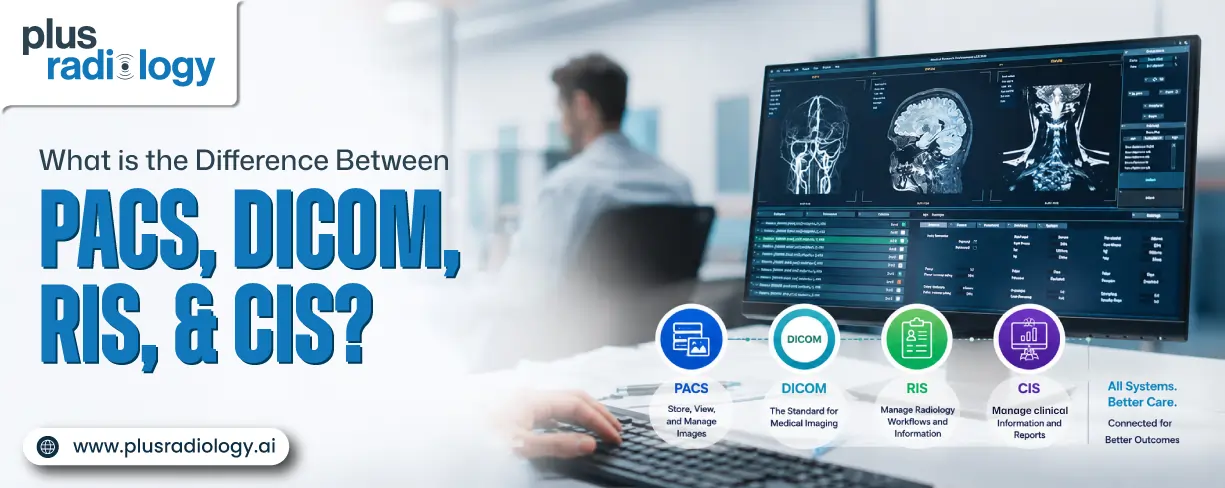

Is RIS the same as PACS?
June 29, 2026

HIPAA Compliance Checklist for Imaging Centers
June 23, 2026
AI for Radiology Reporting: How NLP Transforms Reports
April 29, 2026