
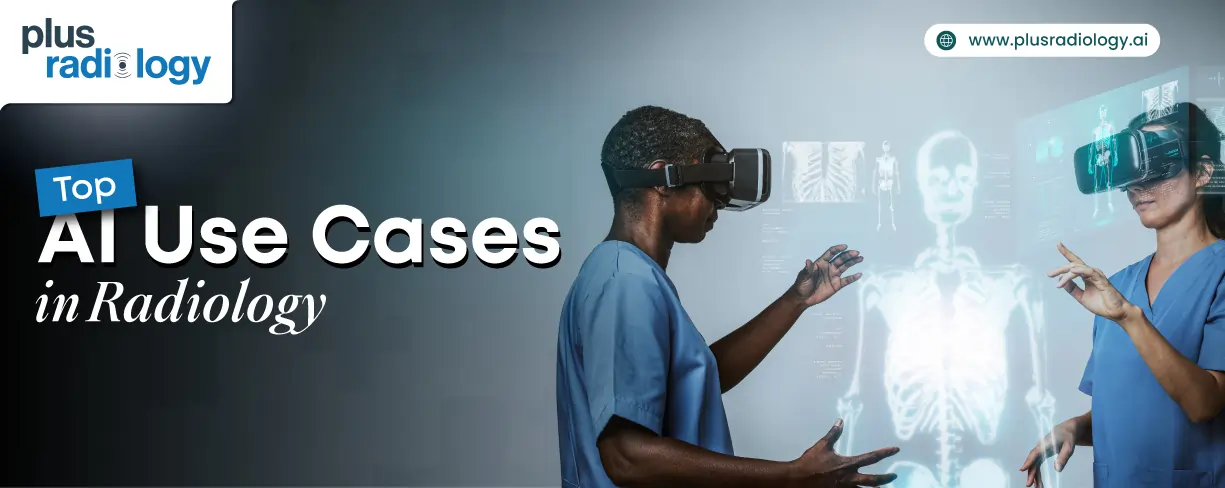
Top 13 Use Cases of AI in Radiology
Summarize this article with:



Not so long ago, medical imaging relied solely on human eyes and experience.
Today, AI has become a trusted partner, helping radiologists spot early disease markers, improve image resolution, and streamline reporting generation.
The journey from manual interpretation to AI assisted diagnostics is renovating radiology departments worldwide.
In this blog, we are going to discuss the practical use cases of AI in radiology, how they are applied to simplify processes and how they’re shaping the future of diagnostics.
Top AI Use Cases in Radiology
The fact about Radiology AI is that it not just optimizes workflow but also improves diagnostic accuracy - all through deep learning and medical image analysis. It even optimizes scanner time and reduces waiting time for the patients.
Given below are some of the most common use cases of Radiology AI in imaging diagnostics.
1. AI in Tumour Detection
Artificial Intelligence in radiology uses advanced algorithms to learn how to detect tumors with the highest accuracy. It is trained by providing large medical datasets to identify tumor patterns.
How AI helps
- AI can find unusual patterns by scanning MRIs, CT scans, and X-Rays
- It can detect minor or even pre-mature tumors
- Can scan a large number of images in less time
Benefits
- Early detection of tumors
- Saves time for doctors
- Helps with better diagnosis
- Treatment can start earlier
Challenges to Note
- Results depend on the quality of training data
- Requires high investment for set-up
- Doctors still need to check results
- Need continuous updates
AI in detecting lung nodules - A case study
Research was carried out, which concluded that AI can help find small lung nodules in CT scans that were hard to notice during normal check-ups.
Speed up the payment process with advanced radiology billing features
2. Case Triaging Through AI
One of the radiology AI use cases is that it can divide the cases into 2 groups: less severe, normal cases, and more severe, urgent cases. Radiologists can get a clear view of the patient’s urgency level.
How AI helps
- AI can check and sort patient cases based on urgency
- It automatically moves critical cases to the top of the list
- Automatically allots the case to the right professionals
Benefits of AI in healthcare images
- Quick response to emergency cases
- Reduces workload by even allotment of cases
- Severe condition patient does not need to wait long
Challenges to Note
- Takes time during setup to integrate perfectly
- Staff need training to use it properly
- Misclassification of cases due to improper training
A case study on Patient case classification
Healthcare centres like the Cleveland Clinic use AI for marking urgent cases of stroke or brain hemorrhage and moving them to the top, helping doctors to review urgent cases first.
3. Automatic Report Generation
AI can help generate reports automatically by considering medical images, saving time. Out of all AI applications in radiology, this has a great impact on the workload of radiologists.
How AI helps
- Build a detailed report by referring to multiple images
- facilitates built-in templates and input fields to save time
- Follows standard medical format
Benefits of AI in healthcare (Radiology)
- Improves report accuracy
- Save time for doctors, so focus goes on patient care
- Other clinicians can easily understand the report
Challenges to Note
- Doctors still need to check the reports
- Risk of data privacy and security
- Can contain some inaccuracies
- Difficult to understand the back mechanism
Report Generation – One of the Radiology AI Use Cases
AI solutions for radiology departments like Qure.ai simplify the radiologist's work by generating reports from multiple medical images. It also flags important research identified from the analysis so that the doctor can focus first on it.
4. High-Resolution Image
The quality of images matters the most for diagnostic purposes. Through AI, high-quality images can be produced, helping radiologists to detect complex details.
How AI helps
- AI for imaging and diagnostics helps by removing noise and focusing on detail
- Works in imaging centres to make results clearer and more detailed
Benefits
- Reduces repetitive scanning
- Saves time for both doctors and patients
- Can able to see even minor abnormalities
- Better accuracy in diagnosis due to clear images
Challenges to Note
- Possibility of changing original data
- Doctors must still verify results
- Needs high-quality equipment and software
AI-based Imaging for Burn Case Analysis - Illustration
Regular imaging techniques fail to provide a clear and sharp view of a burnt body, either through chemicals or heat. In this situation, AI-based imaging techniques improve the quality of images to such an extent that it becomes easy to identify the depth of injury.
5. AI in Predictive Analytics
AI in hospital imaging departments is helping doctors to predict how a disease may grow in the future, so decisions can be made on the treatment procedure. It can also contribute to forecasting operational decisions.
How AI helps
- Based on past and present data, predicts future outcomes
- Can spot patients who might have high risks in the long term
- Can predict future patient volume, financial flow, and inventory (drugs, medicines, injections) management.
Benefits
- Secure the patient’s future
- Reduces chances of mortality
- Help to manage clinical operations based on demand
Challenges to Note
- Needs human verification side by side
- Predictions are not always 100% right
- Must be updated regularly
Example of AI in Predictive Analytics
By referring to the patient's body vitals like heart rate/pulse, blood pressure, oxygen level, and breathing rate, AI can forecast what is the possibility of cardiac arrest.
Keep your system secure with customizable user roles and permissions
6. AI-driven Decision Making
Artificial Intelligence in diagnostic medicine is helping radiologists to make the best possible decisions from many alternatives in radiology by giving useful suggestions based on scan results.
How AI helps
- Gives recommendations based on the scanned images
- Provides pros and cons of every alternative
- Supports decision-making, especially in busy diagnostic centres
Benefits
- Easy decision making
- Provide an instant solution
- Clears all confusion
Challenges to Note
- Too much dependence on AI can be risky
- Can face difficulty with new, unknown cases
Clinical case study: Improves Decision Making
A study was carried out to evaluate the power of AI-based clinical decisions for interpreting chest X-rays during emergencies, and it was found that AI-assistance increases correct diagnosis and patient management.
7. Provides Health Specific Plans
By referring to previous and current patient data, AI can help in suggesting the best possible treatment plans to carry out and can also provide lifestyle plans to follow after surgery.
How AI helps
- Provides personalized treatment plans based on the patient's situation
- Supports personalized medicine
- Provides post-surgery care plans
- Adjust plans according to patient health
Benefits
- Gives a time-to-time reminder for plan follow-ups
- Continuous care increases patient satisfaction
- A better choice can be made on treatment
Challenges to Note
- Need advance algorithm so the implementation cost is high
- Majorly depends on data, so the result depends on data quality
- Initially, it is difficult to switch from a standard to a personalized system
Case study: Personalized radiation dose
Cleveland Clinic carried out research in which they used AI to decide the radiation dose to treat cancer based on referring to CT scans and patient health records. Due to this, the chances of failure reduce to 5%.
Read More : Top Medical Practice Management Software of 2025
8. AI in Teleradiology
Through AI, a radiologist can work from any location, and a patient can get a consultation without being present physically. So AI makes teleradiology more convenient.
How AI helps
- Analyzes incoming scans and highlights severe insights
- Help improve image quality
- Assigning the case to the appropriate remote radiologist
Benefits
- Reduces report turnaround time
- Help patients in rural or remote areas
- Reduces delays in treatment
- Can be considered helpful in emergency cases
Challenges to Note
- Requires a strong internet connection
- Data security and privacy are a great concern
- Doctors need to confirm results due to a lack of trust in AI
- Continuous updating and maintenance are required
Example: AI to work off shifts
If a scan is carried out at night but no radiologist is present to review it at that time, AI searches for a radiologist in another time zone who is available to study the scan.
9. AI in Follow-Up Comparison
AI compares current scans with past ones to track changes in condition. It tracks the recovery progress of the patient side by side.
How AI helps
- Compare current and previous scan images to spot changes
- Highlights differences in medical imaging for doctors so they can review
- Supports diagnostic centres in tracking progress over time
- Can quantify the differences to get a better overview
Benefits
- Makes it easier to see if the disease is improving or getting worse
- Saves time by automatically comparing scans
- Reduces human effort
- Supports instant decisions
Challenges to Note
- Needs high-quality images
- AI may misinterpret some changes if scans are not consistent
- Requires proper software setup and updates
Identifying changes in lesions – A case study
George Eliot Hospital NHS Trust was experiencing difficulties in assessing the changes in dimensions of lesions over time for many patients. But with the use of AI in medical imaging, they can carry out this task easily.
10. Detecting Critical Findings
AI can support radiologists by identifying crucial areas as fast as possible with high accuracy. They are meant to assist the radiologist in improving their workflow.
How AI helps
- Highlights urgent findings for doctors in imaging centres
- Provides an alert for critical findings
- Prioritizes the cases based on severity
- Can detect abnormalities that are serious but hard to find
Benefits
- Reduces chances of mortality by identifying emergencies
- Reduces delay in treatment
- Supports doctors in making quicker decisions
- Reduces the chances of missing severe abnormalities
Challenges to Note
- Can find difficulties in rare cases
- Overdependence on AI can be harmful
- Sending too many alerts can make radiologists avoid them
Highlighting blood leakage areas - An AI application
AI highlights the area of the brain where bleeding is occurring in the CT-scanned image of a patient experiencing a severe headache for a long time. Due to this, the radiologist takes less time to interpret the results and asks for immediate surgery requirements.
Manage high patient volumes easily with automated appointment management
11. AI in Data Structuring
AI helps organize medical data in a clear way. Using artificial intelligence is a good choice to manage data better in diagnostic centres and medical imaging.
How AI helps
- Converts unstructured text into structured data
- Stores data according to category
- Follows standard format according to medical terms
- Performs regular data cleaning
Benefits
- Makes data easy to search and understand
- Helps in research and analysis
- Saves time for doctors and staff
Challenges to Note
- Medical language can become complex to understand
- Needs proper training and setup
- Possibility of errors if the data is not clear
- Requires regular updates
Example of AI in data structuring
In many imaging centres and healthcare systems, AI is used to change long and complex reports into simple, structured data. It is a practical AI applications in imaging, which shows how data handling improves medical imaging.
12. Quality Maintenance and Error Detection
AI can examine scanned images and reports to spot mistakes or inconsistencies. This is a useful AI application in diagnostic imaging and helps healthcare centres maintain accurate results, improve health analytics, and ensure patient safety is maintained.
How AI helps
- AI scans images and reports to find errors
- Continuous monitoring for quality improvement
- Detect when the system needs maintenance
- Keeps on monitoring stored data as well to identify any abnormal act
Benefits
- Reduces human errors made in reports
- Improves overall quality by using AI tools
- Protect from malicious action
- Protect from system downtime
Challenges to Note
- Regular maintenance can be costly
- Errors can still happen if AI is not monitored
- Requires high-quality input data to train
Use of AI in verifying the scan quality
When a scan is not captured perfectly due to the patient's movement, then AI will reject that scan and ask for a re-take in such circumstances.
13. AI in Reducing Radiation Exposure
AI is keeping patients safe by reducing the amount of radiation during scans. Radiation exposure can be harmful to DNA and the cells of the body.
How AI helps
- Adjust scan settings to reduce the dosage of radiation
- Maintains the quality of the image
- Alerts for high dose
- Analyzes patient age, size, and health condition to adjust dose
- Identify if the scan is really needed or not
Benefits
- Reduces patient exposure to radiation
- Maintains the quality of images for diagnosis
- Saves resources by reducing repeat scans or unnecessary scans
Challenges to Note
- Works best with proper machines and technology
- Must be set up carefully to avoid mistakes
- Doctors need to check and oversee results
- Needs frequent updates to stay accurate
Case study – Radiation Dose Exposure
A study showed that AI can reduce radiation dose in pediatric CT scans by up to 70% while keeping image quality good.
What AI Holds for the Future in Radiology
Artificial Intelligence has transformed radiology by constantly working on optimizing how medical images are captured, analyzed, and converted into reports. AI applications in diagnostic imaging show how AI transforms radiology workflows. Learning about emerging AI use cases in radiology allows to stay connected with innovations in technology.
AI Use Cases in Clinical Radiology improve patient care by reducing radiologist workload. Without AI, radiologists can face a downfall in maintaining accuracy. Balancing technology and human expertise should be maintained for continuous improvement in healthcare.
Give a new look to medical imaging with AI-powered radiology solutions – PlusRadiology.
AI Applications in Radiology – Summary:
AI is no longer a distant concept in radiology — it’s here, driving sharper images, quicker diagnoses, and lighter workloads for radiologists.
As diagnostic centres embrace these AI innovations, patient care becomes faster and more precise. This blog has gone through the top Radiology AI use cases, how Rad AI is applied in imaging diagnostics and how its potential is reshaping radiology every day.
Want to convert your hours of work into minutes? Adopt PlusRadiology’s Conversational AI support and make the most out of it.
Everything You Need to Know About AI in Diagnostic Centres
AI doesn’t assign all cases to a particular radiologist. Instead, it allots the case evenly amongst radiologists, helping in reducing workload.
AI results are based on training data quality, so they can be biased in some cases. Due to this, radiologists are responsible for verifying the outcomes at last.
To improve accuracy, to fix security vulnerabilities, and to keep up with evolving technology, it is necessary that regular updates are released.
It can damage your DNA, cells, and tissues, inviting major diseases, especially for patients who visit the medical imaging centers repeatedly.

Recent Posts
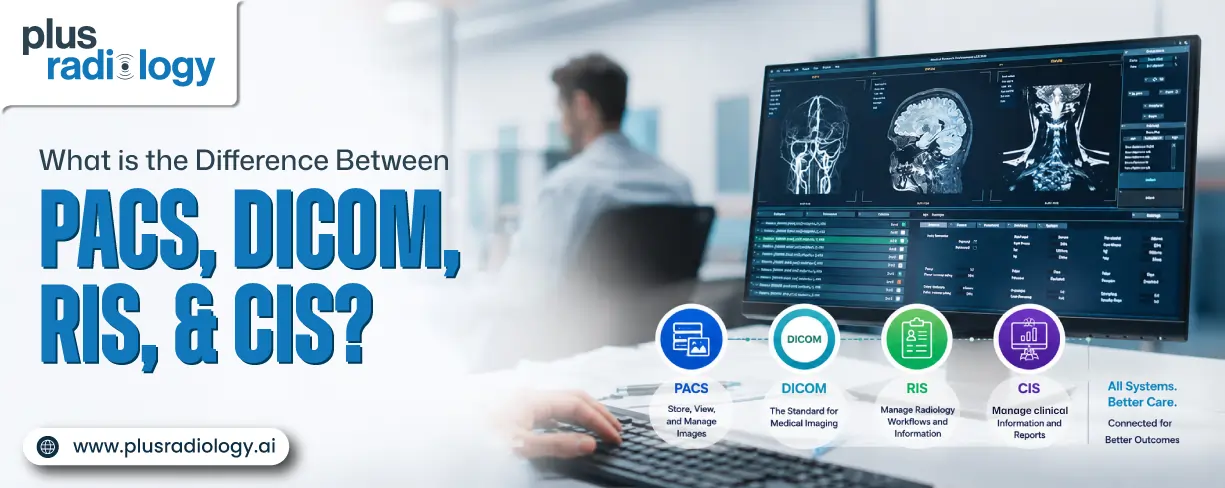

Is RIS the same as PACS?
June 29, 2026
HIPAA Compliance Checklist for Imaging Centers
June 23, 2026
AI for Radiology Reporting: How NLP Transforms Reports
April 29, 2026