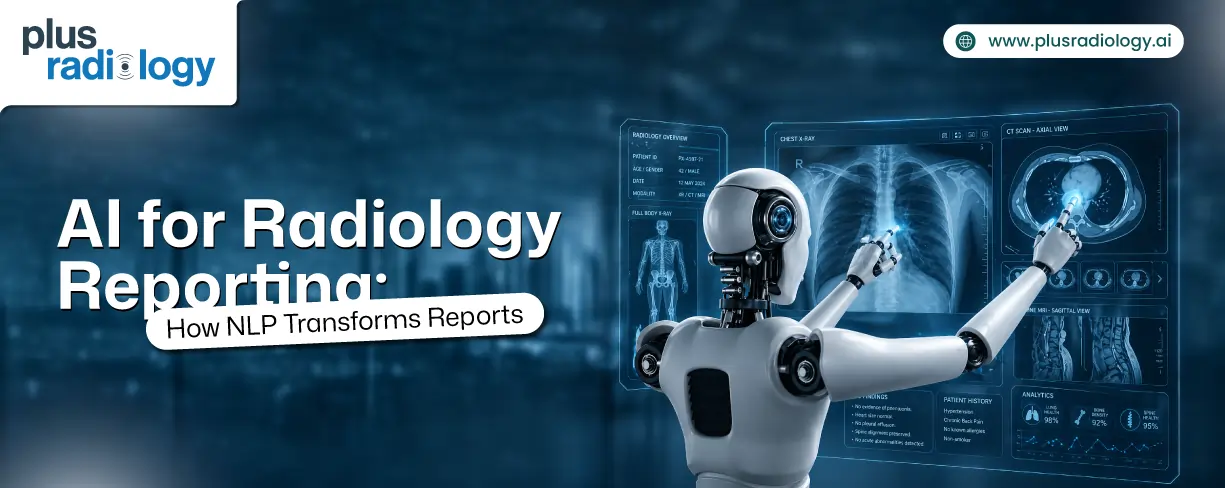
AI for Radiology Reporting: How NLP Transforms Reports
Summarize this article with:

- 1. What is NLP for Radiology Reporting?
- 2. Current Challenges in Radiology Reporting
- 3. How AI for Radiology Reporting Uses NLP
- 4. How NLP Improves Radiology Workflow
- 5. Key Use Cases of NLP in Radiology
- 6. Challenges for Implementing NLP in Radiology
- 7. Best Practices for Implementing NLP in Radiology
- 8. The Intelligence Behind Modern Reporting
- 9. FAQs
Do you know, nearly 80% of radiology reports are unstructured, due to which understanding the patient’s exact metrics and diagnosis becomes difficult. This increases the risk of errors in patient assessment and consumes more time.
To reduce these errors, you require a solution like AI for radiology reporting to play an important role in creating structured and effective records. For better accuracy, AI with Natural Language Processing (NLP) can completely change the process. It converts free-text reports into structured and standardized formats, improving clarity, correctness, completeness, and consistency.
In this article, you will learn how NLP (Natural Language Processing) in healthcare transforms unstructured reports into simple and clear reports for clinicians. You will also understand its impact on doctors, patients, and overall healthcare outcomes.
What is NLP for Radiology Reporting?
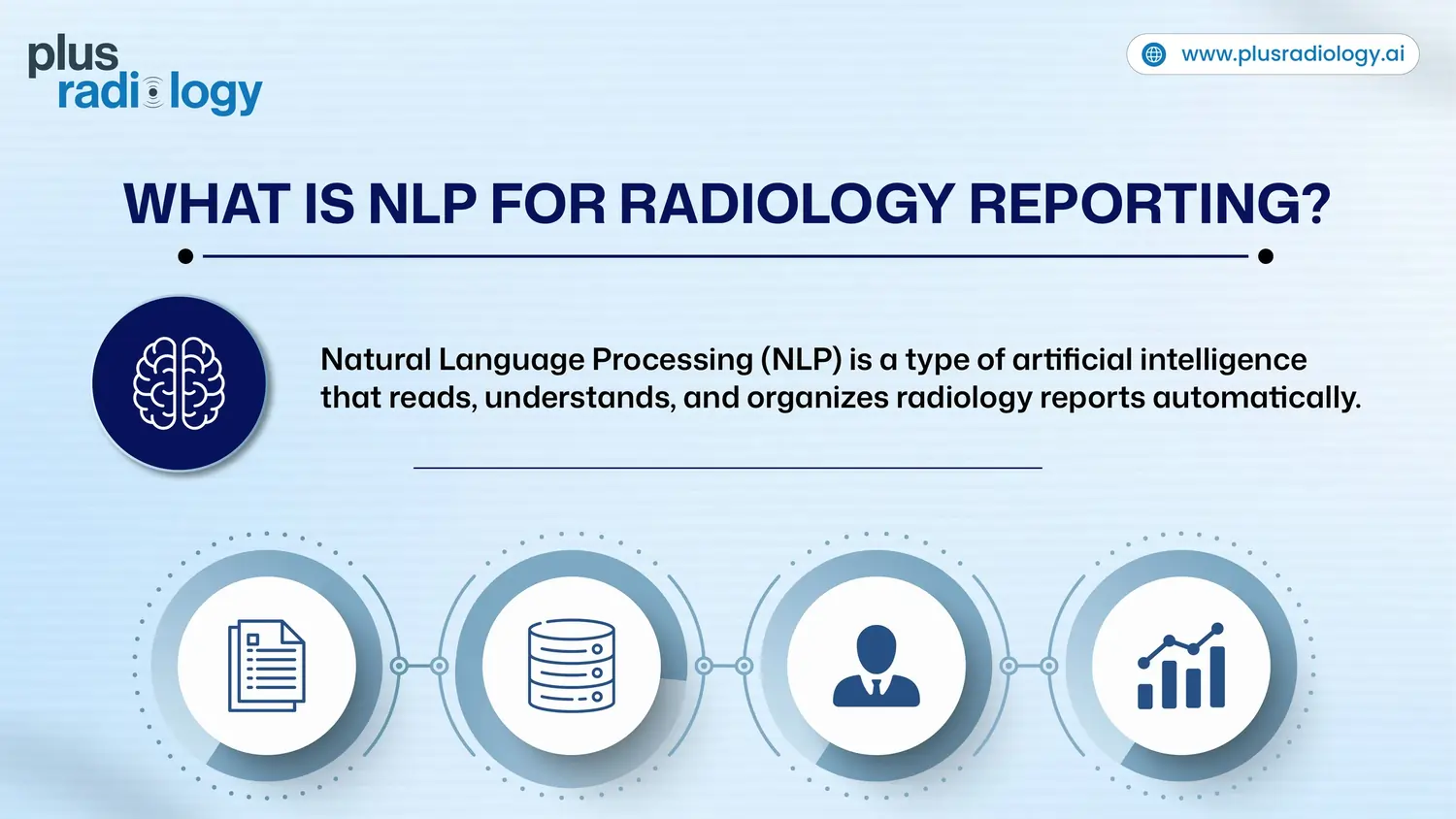
Natural Language Processing (NLP) in radiology reporting is a type of artificial intelligence that helps read and organize radiology reports automatically. It converts human text reports into clear and structured data, such as findings and their locations.
This makes reports easier to understand, improves workflow, helps doctors make better decisions, and supports medical research.
For example: doctors are often busy and need quick patient information. Radiology workflow with NLP helps by changing human text reports into clear and organized data, making reports easier to read and helping doctors make faster decisions
Simplify radiology workflows with smart SOAP notes and live progress insights
Current Challenges in Radiology Reporting
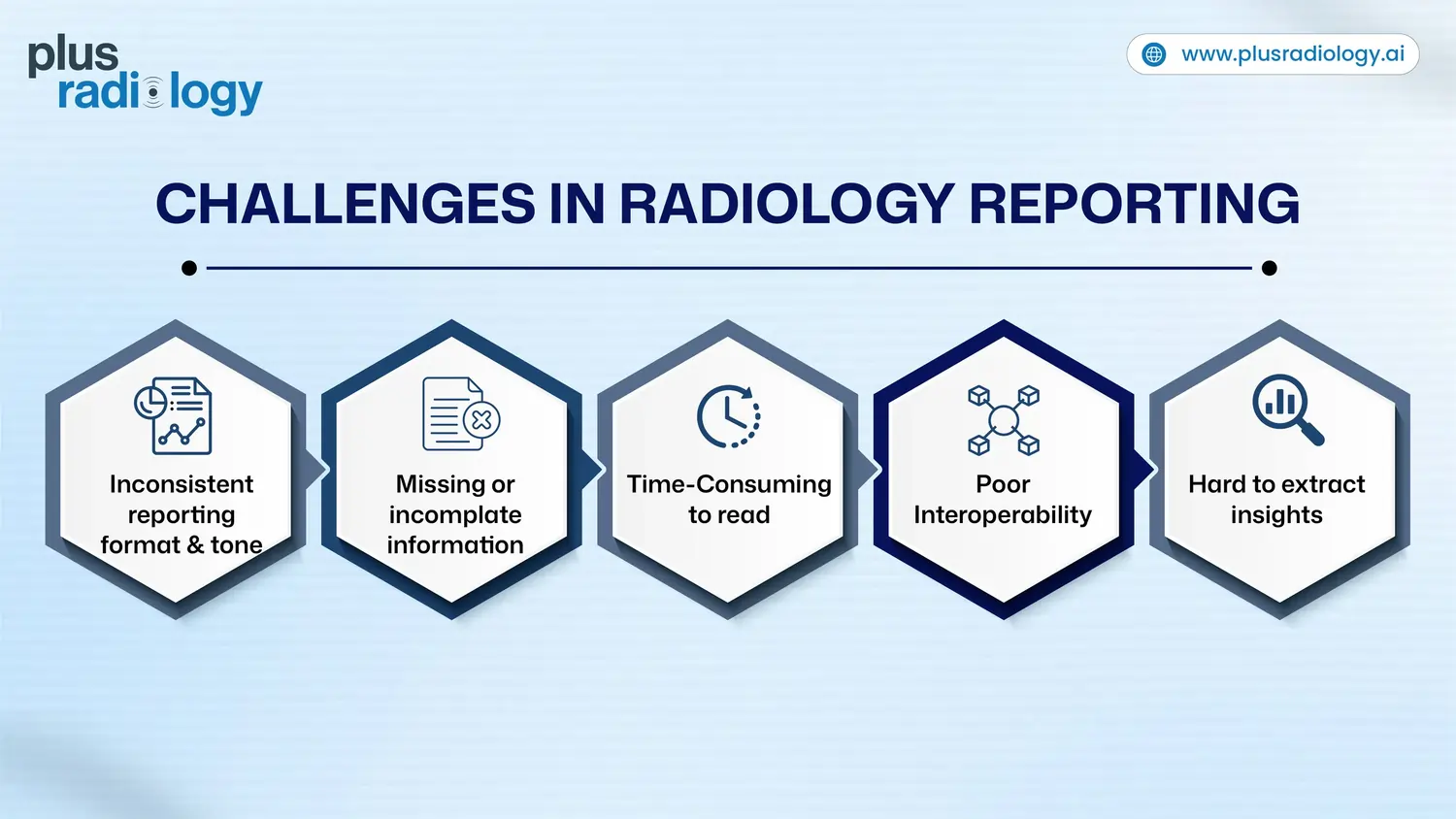
Despite some regulations and supporting technologies for structured reporting in radiology, there doesn’t seem to be any effort to transform the traditional reporting format. The rising concerns due to free-form reporting can invite challenges such as:
- The radiologist doesn’t follow the universally accepted reporting format and tone.
- Radiologists can miss some important details or represent them in precise form instead of elaborating.
- Free-style reports can take more time to understand, which again leads to delay.
- Unformatted and unprofessional tone reports affect the interoperability in radiology software.
- Difficulty can be faced in extracting insights from the reports due to unstructured and non-standardized reports.
There is an immediate need for AI integration in radiology systems that can overcome these challenges so that clinicians can invest most of their time in patient care.
How AI for Radiology Reporting Uses NLP
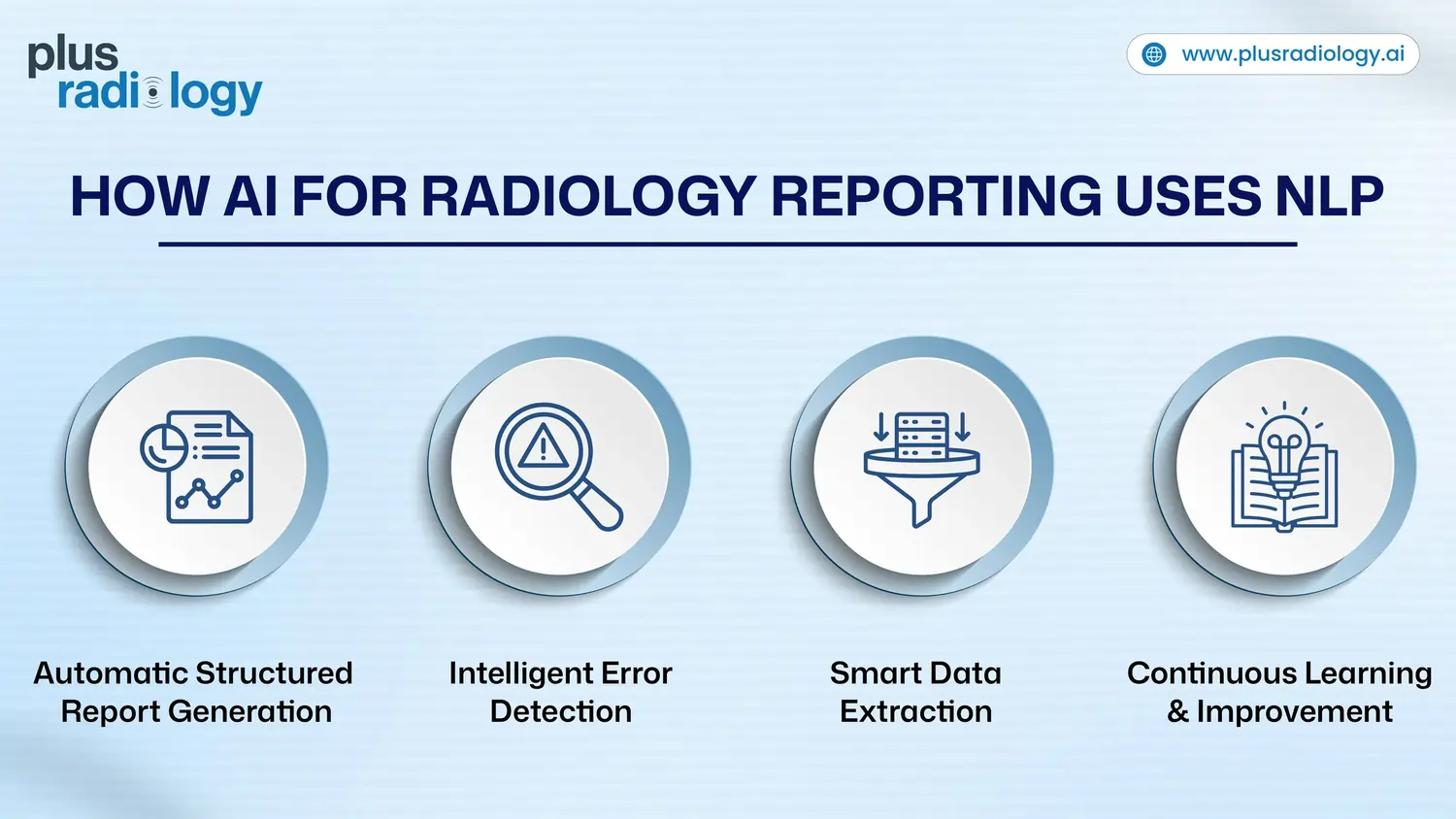
Radiology reporting is not limited to merely stating findings. Through AI-assisted radiology reporting, accurate and clear reports can be generated in minutes. Here’s how NLP transforms radiology reporting:
Automate Structured Report Generation
As radiologists begin typing or dictating the report,
- NLP simply listens or captures each detail.
- Then it tries to understand the intent behind the content rather than only reading the words.
- Modifies the content by replacing the human language with clinical language, maintaining the medical nomenclature.
- And at last, places each piece of information in a section where it belongs.
A completely structured and standardized report is generated in minutes.
Read More : Top 13 Use Cases of AI in Radiology
Intelligent Error Detection
Reports are mostly created quickly in the stress of handling large volumes, so there is a high possibility of missing details, misspelled words, and unclear statements. But no need to worry, as NLP can even address this hurdle.
- NLP can identify which mandatory section is missing or which information in a particular section is missing.
- NLP can also find any contradictions, as it understands the entire report
- It can also detect any misspelled words and rectifies it.
- If any information needs more elaboration, then it is highlighted and asks for more explanation.
NLP provides real-time feedback when reports are being generated.
Smart Data Extraction
Before NLP structures the report, it performs data extractions. As you know, a radiologist writes reports randomly without any flow. Simply presenting free-form text into a well-formatted and well-toned document doesn’t make any sense.
Instead, extracting the key insights and then presenting them in a structured and standardized form will make more impact in the clinical workflow. This is what NLP does.
NLP does not simply extract the keywords written by radiologists. It first understands the underlying intent and then arrives at final insights.
Continuous Learning and Improvement
After deploying, NLP does not stop learning. It tries to match the expectations based on feedback given by radiologists.
Reporting styles vary between radiologists, but NLP can easily adapt to variations, unlike humans, who consume the same findings in different ways.
By going through reports of unfamiliar cases, it gets more trained to handle unusual situations also.
Basically, NLP gets better with each input fed to it, as it keeps learning and improving.
NLP for radiology reporting generates professional reports that are universally accepted. In addition, NLP adoption in radiology improves decision-making and saves clinicians' time.
Expand your reach with secure, real-time teleradiology and remote access
How NLP Improves Radiology Workflow
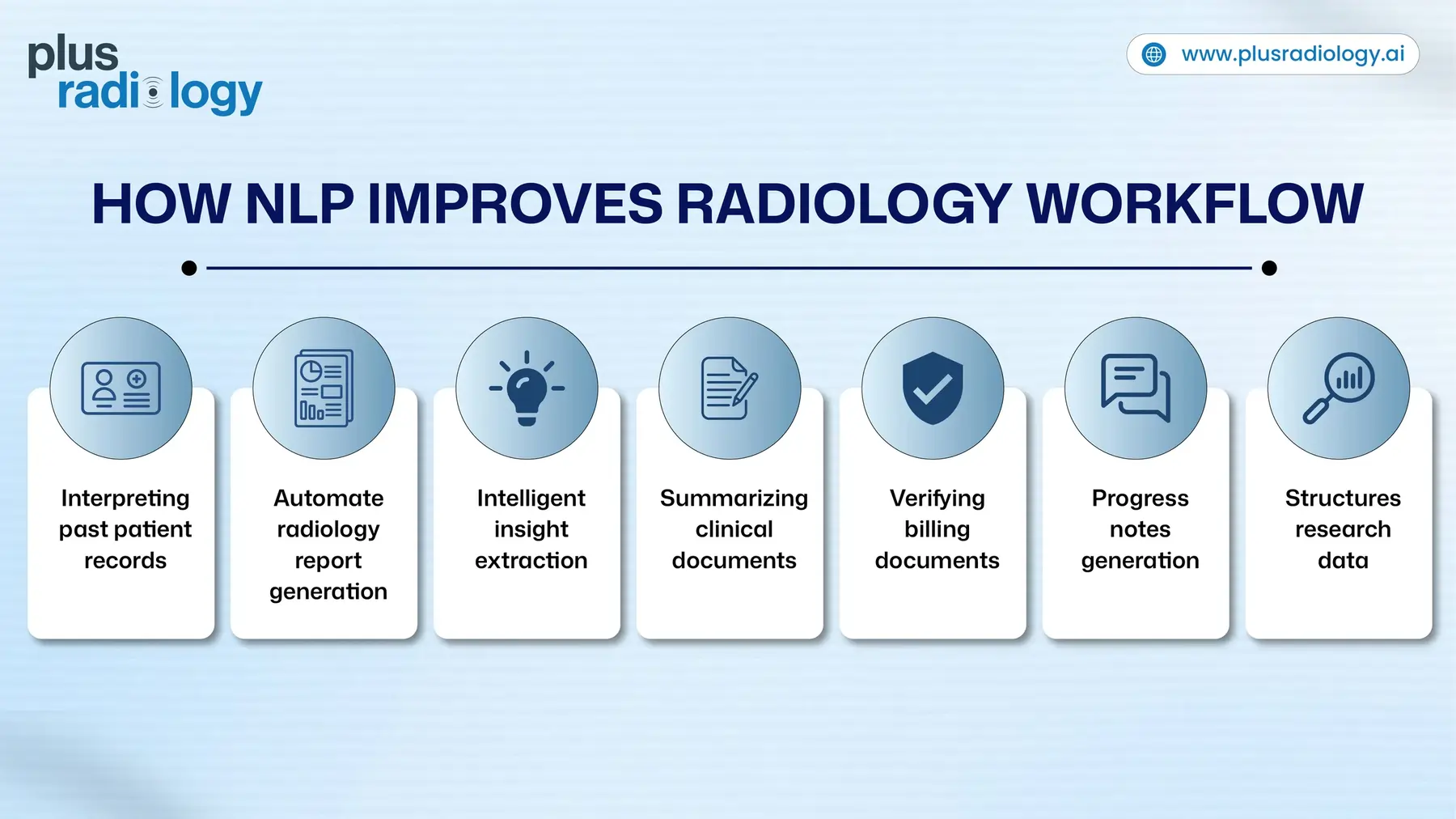
NLP enables radiology workflow automation by changing the way clinical documents are generated and presented. Radiology workflow with NLP makes great impacts from reporting to billing and discharge summaries. Let’s look at where NLP has created a difference in radiology workflow:
- Interpreting past patient records
- Automate radiology report generation
- Intelligent insights extraction from reports
- Summarizing any clinical document
- Verifying billing documents
- Progress notes generation
- Structures research data
In a day-to-day radiology workflow involves generating and processing lots of clinical documents, but with NLP, all documents can be generated automatically with perfection.
Key Use Cases of NLP in Radiology
The potential of NLP in clinical documentation creates a great impact on optimizing radiology workflows. Now let’s discuss some use cases of NLP in radiology:
Longitudinal Evaluation
A patient goes through multiple scans during medical treatment. And clinicians have to read past scans every time, along with the current one, to make any decision regarding a change in treatment plans. But this can be very time-consuming.
NLP can read multiple reports and summarize them in minutes. So, clinicians don’t have to invest more time in reading past reports.
Case Triaging
When a report reflecting high severity comes in, NLP can determine the level of urgency based on the details mentioned in the report. It highlights the high-risk information, which shows the emergency level.
Due to this, clinicians can prioritize the case and carry out any required action on time without delay. This is one of the benefits of NLP in the radiology workflow.
Finding a perfect candidate for clinical trials
Clinical trials involve a strict set of criteria to be followed. Such as the type of disease, stage of disease, age, gender, current health situation, and previous treatments, etc. So to find an appropriate match, the candidate’s medical reports, clinical notes, and historical records need to be verified.
Manually referring to medical documents for each candidate is a long process. But NLP can carry out this task easily. It first understands the criteria, analyzes medical data, and finds the correct candidates.
These examples can show that NLP is not limited to structured reporting. Healthcare providers can optimize radiology workflow with AI by automating the data extraction from clinical documents.
Challenges for Implementing NLP in Radiology
It is obvious that to experience standardized radiology reporting, it is essential to learn What are the challenges for implementing NLP in radiology. Let’s explore some of them:
-
Integration with legacy system: Many systems, like RIS, PACS, and EHRs, were built before NLP was introduced, so they don’t support NLP to a great extent. There can be compatibility issues if existing systems are not updated to support new technologies.
-
Data privacy and security concerns: In radiology, highly sensitive data are included. It is tough to protect data and to comply with security regulations. Any harm to data can lead to legal and financial consequences.
-
Training and user adoption: Sometimes radiologists resist the new technologies due to fear of workflow disruption. So, lack of training and guidance may lead to improper use of NLP tools. This can increase the workload rather than reducing it.
-
Cost of AI-powered radiology software: A high initial cost for setting up and introducing NLP tools in radiology software is expected. Besides, the cost of maintaining these tools for better performance is also a concern.
-
Evolving NLP adoption in radiology: NLP solutions have not yet fully evolved. Many changes are occurring to make them an appropriate tool for radiology. This can be a pain point that can make radiologists rethink adopting NLP.
So don’t let the advantage of structured reporting in radiology hide the underlying limitations of NLP. It is necessary to be aware of these pitfalls before adopting NLP.
Unify multiple radiologists on one platform for faster, consistent diagnostic reporting
Best Practices for Implementing NLP in Radiology
Let’s discuss how NLP adoption in radiology can be done, so that maximum advantage can be achieved:
-
Begin with small areas and high impact: Instead of implementing NLP in the entire workflow, implement it at one stage where it can show a large positive change. After a great response in small areas, scale the implementation further.
-
Choose the right tool: Before purchasing, know your requirements and then approach the appropriate vendor. Analyze the tool by checking if it satisfies your needs or not. Choose one that enhances performance.
-
Focus on human + AI collaboration: NLP solutions are built by keeping them aware of their limitations. They are supposed to be meant for assisting radiologists. NLP should not overemphasize radiologists’ final decision.
-
Continuous monitoring and optimization: Deploying doesn’t end the process. Continuous performance tracking is required to ensure the AI solution is working properly or not. This will ensure long-term sustainability.
Investing time to implement NLP effectively in radiology is justified because proper implementation can enhance performance.
The Intelligence Behind Modern Reporting
Natural Language Processing in healthcare can convert a large amount of free-style medical data into actionable insights. Clinicians can make use of these insights directly without spending time reading and then extracting useful data. NLP can understand the language of radiologists and can portray all the details as radiologists expect. It provides smart reporting with real-time error detection. Through AI-powered radiology software, clinicians invest less time in documentation and more time in patient care. With the implementation of NLP, reports can become more interpretable—improving communication across medical departments. Reporting is the backbone of any medical domain. So smart, scalable, and standardized reporting can make a great impact for guiding clinicians in treating patients correctly.
FAQs
Structured reporting reduces turnaround time, enhances clarity & consistency, improves accuracy, and saves the time of radiologists.
NLP in radiology reporting is used to understand and transform the human-written reports into a structured format and standardized tone. This helps maintain consistency, clarity, completeness, and correctness in the reports.
NLP solutions are trained to adapt to variations in the reporting styles of radiologists. They interpret the same finding from different radiologists with equal accuracy.
Yes, when the radiologist is dictating and typing the report, NLP keeps on converting the report into a structured format and maintains proper medical terminology. Besides, it also keeps detecting errors and highlights them at that time.

Recent Posts
Is RIS the same as PACS?
June 29, 2026
HIPAA Compliance Checklist for Imaging Centers
June 23, 2026