
TeleRadiology Benefits and Barriers for Radiologists
Teleradiology has significantly advanced the radiology field, giving doctors flexibility and anytime access to patient reports.
Despite being in any location or time zone, virtual consultation enables radiologists or oncologists to access and analyze patient reports effortlessly.
However, along with the benefits, there are also challenges that need attention.
This article looks at both sides: the advantages and the limitations of teleradiology in real practice.
Let’s begin with a quick overview.
What is Teleradiology?
Teleradiology is the process in which imaging documents are shared from one place to another through a particular communication medium. Basically, teleradiology involves the exchange of images such as CT, MRIs, X-rays, and many more on a transmission platform for remote interpretation of them.
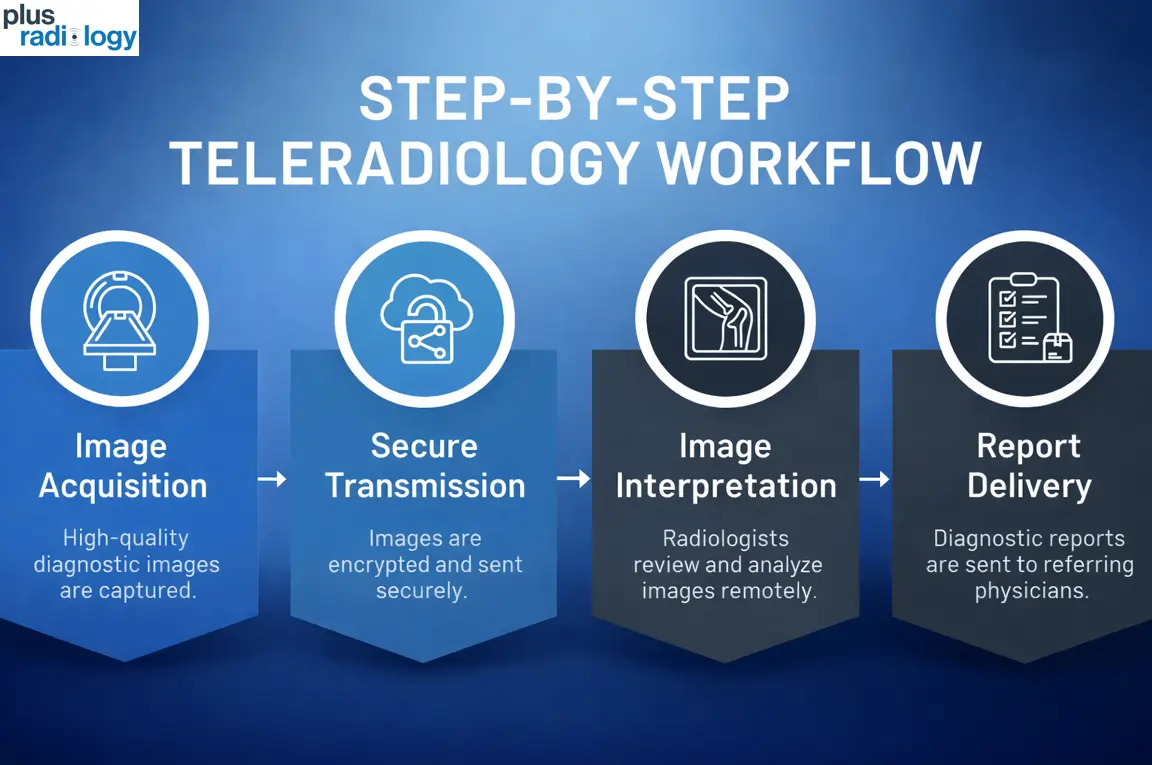
The teleradiology workflow begins with the capturing, transmission, & interpretation of images, and ends with the delivery of the generated report from the scanned image. This workflow becomes more efficient if proper integration of RIS, PACS, and EHRs is done within a radiology software.
Efficient billing and invoicemanagement designed for modern radiology practices
Key Benefits of Teleradiology for Radiologists
Teleradiology reduces the exhaustion of radiologists due to the flexibility it primarily provides through distance radiology services. Let's look at some of the recognized advantages of teleradiology.
Improved Work Flexibility
Due to the availability of cloud-based PACS and EHRs, the required images and documents can be accessed remotely. Radiologists don't have to restrict themselves to a single hospital or fixed schedules. There is no need for physical presence to interpret an image and generate a report.
Just like they can work from any location, they can work on any favorable shift according to their needs. There are options for part-time shifts, freelancing, and night shifts.
Another thing is that, even in the situation of a global crisis, teleradiology helps radiologists to continue providing the services, ensuring job stability.
Faster Turnaround Time
High emergency cases are flagged and prioritized by RIS so that the modalities identify the severity and perform the scan of that case first. Besides, by looking at the priority, radiologists generate the report of an urgent case by leaving aside all other cases.
This helps radiologists to maintain a faster turnaround time by reducing delays in reporting. Online radiology reporting systems can be beneficial for radiologists in serving the emergency by delivering the reports before the due dates.
Access to Subspecialty Expertise
The radiology domain is not limited to one specific specialty. It contains a wide variety of specialties such as breast imaging, oncology imaging, gastrointestinal radiology, musculoskeletal radiology, and many more.
In onsite radiology services, radiologists have to attend many cases that are out of their expertise because it is impossible to have a radiologist from each specialty.
But teleradiology allows radiologists to connect with professionals in a specific specialty. Besides, RIS can directly assign the case to the expected professional by looking at the medical data (clinical notes, scans, etc.) of the patient.
This can help radiologists from any corner of the world to attend the cases of their expertise and hence more accurate results are observed.
Access to Subspecialty Expertise
Case assignment is done after checking the workload of radiologists. Due to this, radiologists don't have to suffer from an unmanageable number of cases and don't have to work for long hours without taking a break.
Radiologists can generate reports in less time due to the built-in templates and facilities for entering data easily. PACS is a centralized image database that stores thousands of images attached with patient metadata. It allows instant and easy retrieval of images with better scan comparison features.
These are some of the reasons for the reduction in the workload of radiologists, which enhances their productivity at the workplace.
Enhance patient experience with quick and accurate appointment scheduling
Unlock Career Opportunities
Radiologists working onsite are limited to a single diagnostic centre, but through teleradiology, they can work for multiple diagnostic centres. They simply have to connect to the radiology software, which helps them to work from any corner by eliminating distance as a hurdle.
The employment opportunities for radiologists have increased. Radiologists can achieve multiple sources of income from all over the world only through teleradiology. Besides, radiologists from rural areas can work with large hospitals in urban areas.
Key Challenges in Teleradiology
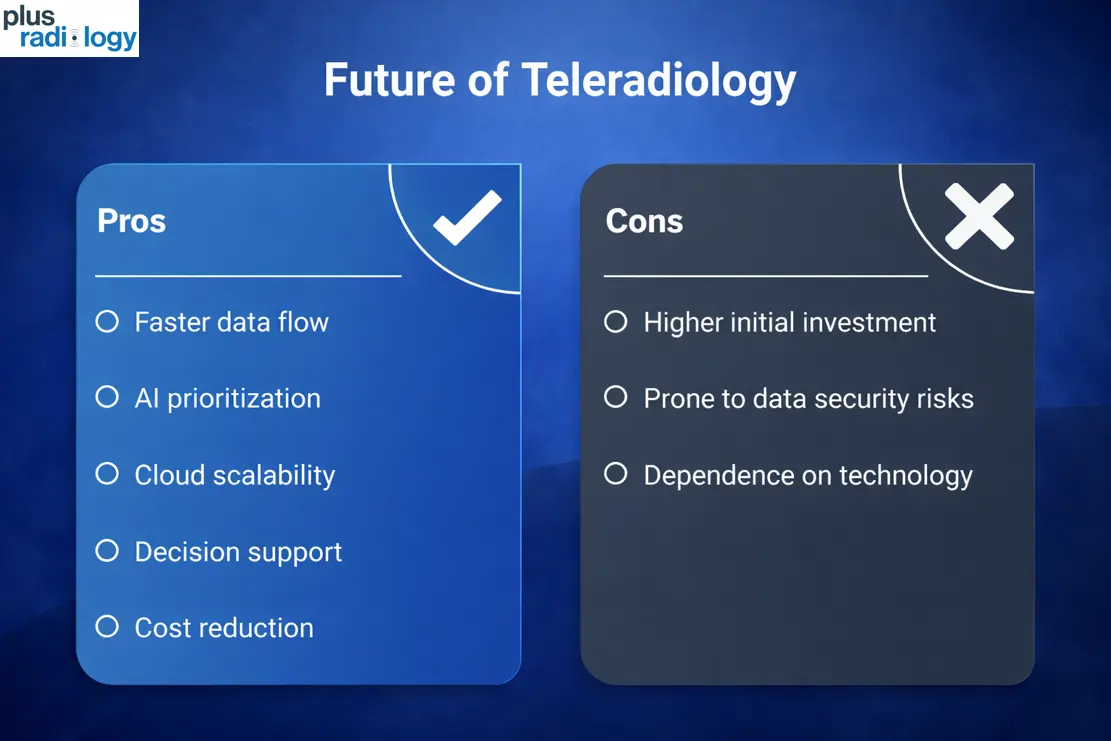
Teleradiology has spread the imaging facilities across the entire world, but it is still not completely evolved. Hence, making it less suitable for adoption unless and until its limitations are not addressed.
Data Security and Privacy Concerns
In teleradiology, patient data travels from PACS to the cloud and then to radiologists. And between this flow, there is a great risk of getting patient data leaked. The network through which sensitive patient information is transmitted can be compromised by unauthorized personnel to gain access.
When patient data is violated, there is the possibility of legal consequences, which can affect the reputation of the hospital or diagnostic centre. Besides, the patient loses trust and will never choose to visit again.
So, maintaining a balance between security and seamless teleradiology services is a tough task.
Communication Gaps
Physical communication between radiologists cannot occur in teleradiology, unlike onsite radiology services. Due to the absence of face-to-face conversations, there can create misunderstandings and confusion between radiologists, referring clinicians, and technologists.
When more than one radiologists involved in the same case, but are from different locations, then they can face difficulties in explaining their POVs to others. They only need to rely on written documents instead of discussing with others.
Permission Issues
Different countries have their own laws regarding medical practices. So, radiologists have to follow all the guidelines from each place, according to where they work. They need to have a valid license for the place where they are practicing.
Besides, they need to comply with all the standards and regulations to avoid any legal actions, such as large fines and penalties, restrictions on services in some regions, permanent loss of license, etc.
Sometimes, radiologists limit themselves to working in different time zones due to complex rules and regulations. And it increases the workload of radiologists to maintain the licensing and other regulatory documents.
Technology Dependence
Technology is the backbone of teleradiology. From capturing to delivering reports, the entire teleradiology workflow is based on technology. Image acquisition requires high-tech modalities, image storage requires PACS & cloud, transmission of images requires the internet, specific diagnostic screens are required for viewing images, and AI+RIS is required for generating reports.
The risk of slow internet, system downtime, network connectivity issues, software bugs, and hardware failures can cause interruptions in radiologists’ work. This interruption can cause a delay in serving the deadlines, which eventually affects the patient's health.
Quality Assurance and Standardization
In teleradiology, radiologists can be distributed across the world. Due to this, there can be large variations in the way of carrying out interpretations and also in generating reports.
Maintaining consistency across distributed radiologists is very tough in teleradiology. Absence of consistency can make clinicians take more time in reading reports and thus delay any decision-making, affecting the patient's health. Hence, maintaining the same quality of service is tough in teleradiology.
How to overcome teleradiology challenges
Let's explore some of the solutions that can address the limitations of teleradiology:
Adoption of secure, compliant platforms
To transmit the patient data securely and safely, the following should be noted:
- Implement strong data encryption while data is in transit or at rest
- Ensure the login system implements multi-factor authentication, role-based access
- Maintain audit trails for every action
- Ensure strict adherence to healthcare regulations
This will keep patient data safe and increase the trust amongst patients.
Simplify daily operations for solo radiology clinicswith integrated solutions
Strong communication channels and collaboration tools
To reduce misunderstanding or confusion, there is a need for a proper communication medium, which should include:
- Chatting and messaging features inside the radiology software
- Voice and video communications
- Shared access to reports and images with real-time visibility functionality
- Notifications and alert systems inside
This eliminates the need to jump between one interface to another and also the need for external communication mediums.
Continuous training and quality checks
To provide the same level of quality service, there should be:
- Regular performance tracking of each radiologist
- Necessary training on the new evolution in technology
- Feedback mechanism for more improvement
Through all this, an overview can be gained on which radiologist is not providing the expected performance and thus can be taken into account.
Standardized reporting frameworks
Standardized reporting involves:
- Built-in templates of reports for a specific disease, modality, or body part
- Mandatory sections such as symptoms, findings, recommendations, etc., that can't be skipped
- Uses universally accepted medical terminology only
With the help of this, consistency is maintained in reporting, which eventually benefits referring physicians in reading the report quickly without any confusion or misinterpretation.
With the help of this, consistency is maintained in reporting, which eventually benefits referring physicians in reading the report quickly without any confusion or misinterpretation.
Balancing Opportunity with Responsibility
Proper planning is required before introducing telemedicine radiology services into your system to ensure proper integration into the existing workflow. Teleradiology is not just about expanding the radiology service across the globe, but it also involves providing high performance and strong security.
No doubt, teleradiology comes with multiple benefits that can be unforgettable, as it creates a great impact on a radiologist’s life. From flexible work location & shifts to faster turnaround time, teleradiology has made its presence count.
But challenges in teleradiology can’t be ignored by just looking at some of its benefits.
Handling radiology services all around the world is not easy, as it has to deal with a mixture of clinical, technical, and regulatory factors. So, to maintain the effectiveness of teleradiology, addressing its limitations is mandatory.
FAQs on Teleradiology Pros and Cons:
Yes, but only when correct data protection strategies such as strong data encryption, multi-factor authentication, role-based access, and audit trailing are implemented while providing remote radiology services.
Teleradiology improves diagnostic efficiency by making radiology services available 24/7, providing global access to various radiologists, contributing to intelligent case triaging, and enhancing radiologist productivity.
The technologies needed for teleradiology are imaging modalities, PACS, RIS, EHRs, cloud platforms, diagnostic workstations, and secure networking & transmission protocols.
No. Sometimes radiologists need to be physically present with the patient during the scan, and sometimes need to communicate with clinicians in-person, which is possible only in on-site radiology.
Recent Posts

AI for Radiology Reporting: How NLP Transforms Reports
April 29, 2026
Why Oncology CT Imaging Needs a New Generation of AI
April 23, 2026

Top 18 Misconceptions About AI in Healthcare
April 09, 2026